


Publications
PD Dr. Estela Schindel
2022 / Monographie
-
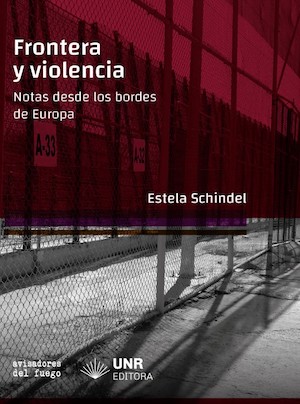
Universidad Nacional de Rosario Editora
Borders and Violence. Notes from the Edges of Europe, National University of Rosario Press, 2021.
-
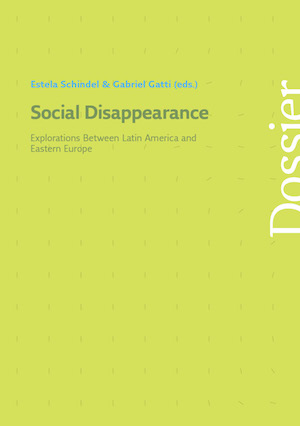
Social Disappearance: Explorations Between Latin America and Eastern Europe (edited with Gabriel Gatti), Forum Transregionale Studien, 2020.
The publication is freely available at perspectivia.net .
-
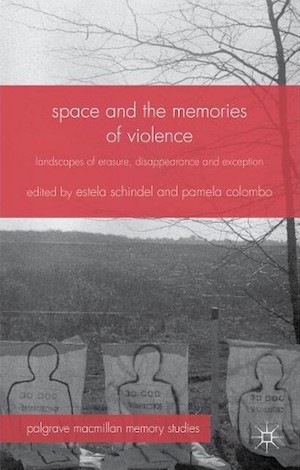
Palgrave Macmillan
Space and the Memories of Violence. Landscapes of Erasure, Disappearance and Exception (ed. with Pamela Colombo), Palgrave Macmillan Memory Studies Series, London, 2014.
Reviews in the following journals LL Journal (CUNY) and Papeles del CEIC. Journal of Collective Identity Research (in Spanish).
-
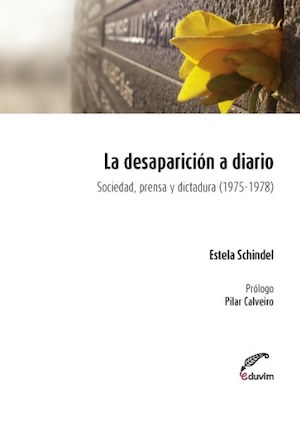
Editorial Universitaria de Villa María
Daily Disappearances: Society, the Press and the Dictatorship (1975–1978). Editorial Universitaria de Villa María, Córdoba, 2012. (Second edition, 2016).
Reviews in the following journals Graph and Policies of Memory (in Spanish).
-
Cono Sur Büro der Heinrich Böll Stiftung
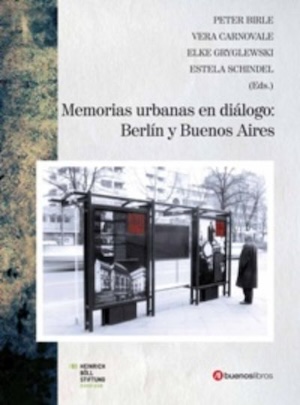
Urban Memories in Dialogue: Berlin and Buenos Aires (edited with Peter Birle, Vera Carnovale and Elke Gryglewski), Cono Sur Office of the Heinrich Böll Foundation/Buenos Libros Verlag, Buenos Aires, 2010.
The publication is freely available on the website of the Heinrich Böll Foundation.
-
Metropol Verlag
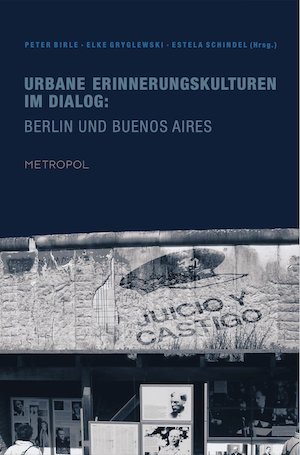
Urban Cultures of Memory in Dialogue: Berlin and Buenos Aires (edited with Peter Birle and Elke Gryglewski), Metropol Verlag, Berlin, 2009.
Articles and contributions
"The Anthropocene as an Epistemic Crisis: The EU Green Deal From the Perspective of Latin American Decolonial Critique", Politique européenne 2025/2 No. 88, 88–111.
"No handkerchief, no ID: Joys and tragedies of identity documents" (No handkerchief, no ID: Joys and tragedies of identity documents), Papeles de Identidad, Vol. 2 (2024). (In Spanish)
“Europe and the migrant’s gaze: three approaches to migration in research and film”, Identities. First published online, 27 March (2023)
"Death by ‘nature’. The European border regime and the spatial production of slow violence", in: Environment and Planning C: Politics and Space, 2022, 40(2), Theme Issue: Spatial Politics of Slow Violence and Resistance, 428–446. First published online, 10 November 2019, DOI: 10.1177/2399654419884948.
“Deserts, Seas, Islands: Geographies of Disappearance in the Context of Migration” (Deserts, Seas, Islands: Geographies of Disappearance in the Context of Migration). In: Papeles des CEIC, International Journal on Collective Identity Research (Print Version and Online), 2020, (1)1, paper 228, 1–16. DOI: 10.1387./pceic.20909.
“Deaths and Disappearances in Migration to Europe: Exploring the Uses of a Transnationalised Category", in: American Behavioural Scientist, Special Issue: Deaths at the borders. Revisiting the debate in light of the Euro-Mediterranean crisis (Print Version), 2020, 64(4), 389–407.
"Europe, Mobility, Nomadism". Response to Rosi Braidotti’s ‘Nomadische europäische Bürgerschaft’ in the ‘Debate’ section, Zeitschrift für Kulturwissenschaft 1/2019, 114–119.
“Desaparición. Life at its Limits”, with Ignacio Irazuzta and María Martínez. Oñati Socio-legal Series, Special Issue *La desaparición forzada de personas: circulación transnacional y usos sociales de una categoría del derecho humanitario*, Oñati International Institute for the Sociology of Law, (2019).
"Hotspots. European borders as a geopolitical and humanitarian laboratory", Berliner Debatte Initial 29 (2018) 1, special issue “Complex Borders”, pp. 39–52.
“Biometrics, Body Normalisation and EU Border Control” (Biometrics, Body Normalisation, and EU Border Control), in: Athenea Digital, Journal of Social Thought and Research, Vol. 18, 1 (2018), 11–31.
French version: Biometrics, Body Normalisation and EU Border Control, in Atelier Sangs Politiques, Anstett, Elisabeth and Gabriel Gatti (eds), Politika, 2018.
“Migrants and refugees at Europe’s borders. Qualification through suffering, bare life and paradoxical agencies”. Revista de Estudios Sociales, Universidad de los Andes, Special Issue: The citizen-victim. Jan–Mar 2017, 16–29. English version: Migrants and Refugees at the European Borders: The Legitimacy of Suffering, Bare Life and Paradoxical Agency.
"Bare Life at the European Borders. Entanglements of Technology, Society and Nature", in Journal of Borderlands Studies, 31(2), (2016) 219–234.
“'Blowing off the boat'. The sea border crossing to Europe, a navigation on the nature/culture divide", Mobile Culture Studies, The Journal, Special Issue The Sea Voyage as a transitory experience in migration processes, I/2015, 199–216.
"Grasping the global and the local in memorialisation practices. Some dialogues and tensions between Latin America and Europe", European Review, Special Issue: Transnational Memories, 22/4, 2014, 594–602.
"Ghosts and Compañeros. Haunting Stories and the Quest for Justice around Argentina’s former Terror Sites". Rethinking History. The Journal of Theory and Practice, Special Issue: Historical Justice, 18/2, 2014, 244–264.
"'‘Now the Neighbours Lose Their Fear’: Restoring the Social Network around Former Sites of Terror in Argentina", The International Journal of Transitional Justice, Vol. 6, 2012, 467–485.
"In the shoes of the sufferer. Epistemological and ethical approaches to the former clandestine detention centres. Or: what footwear should one wear when visiting a concentration camp?", in Papeles del CEIC, Vol. 2013/1, No. 93, CEIC (Centre for Studies on Collective Identity), University of the Basque Country.
“Inscribing the past in the present: memory and urban space”, in Revista Política y Cultura, Autonomous University of Mexico, No. 31, Spring 2009, Mexico City, Autonomous Metropolitan University. pp. 65–87.
“The Presence of the Past in Urban Space: Places of Memory in Argentina, Brazil, Chile and Uruguay”, in: Latin America Analyses, Institute for Ibero-American Studies, Hamburg, No. 9, 2004, pp. 155–180.
"Latin American Anthropocenes: Pre-Hispanic Hydraulic Engineering and the Waters of Tlaloc", in: Bieke Willem and Rebecca Seewald (eds.), Aquatic Environments. Literary Hydropolitics in Latin America, transcript, Literary Ecologies, 2025, 23–45.
“Mobility and Disappearance: Transregional Threads, Historical Resonances”, in: Estela Schindel and Gabriel Gatti (eds.), Social Disappearance. Explorations Between Latin America and Eastern Europe, Forum Transregionale Studien, online and open access on perspectivia.net, the Max Weber Foundation’s publication platform, 2020, 17–44.
“Lives on the Limit: Citizenship and Exposure at the Borders of Europe”, in: Estela Schindel and Gabriel Gatti (eds.), Social Disappearance. Explorations Between Latin America and Eastern Europe, Forum Transregionale Studien, online and open access on perspectivia.net, the Max Weber Foundation’s publication platform, 2020, 191–205.
“The Biopolitical Schism. Material and Symbolic Demarcations along the EU’s Borders”, accepted for publication in Bruns, Claudia et al. (eds.), Border Studies – The Borders of Europe. Theory and History from Antiquity to the Present, 2018.
“The role of ‘nature’ at the EU maritime borders: Agency, ethics and accountability”, in Paasi, Anssi Paasi, Eeva-Kaisa Prokkola, Jarkko Saarinen and Kaj Zimmerbauer (eds.), Borderless Worlds for Whom?: Ethics, Moralities and Mobilities, New York: Routledge, 2018, 212–223.
“Violent Borders. The Melilla fence and the injuries of the Schengen regime”, in James Tyner (ed.), The Idea of Violence, Viella/Kent State University European Studies, Rome, 2018, 117–132.
“The Time Traveller. Anticipation, Reception and Aftermath of H.G. Oesterheld’s *Eternauta*”. Afterword to the German edition of *Eternauta*, Berlin, Avant-Verlag, 2016, 379–391. Forthcoming as “The Captured City. Urban States of Emergency, Circularity, History and Transformation in *El Eternauta* by H.G. Oesterheld”, in: Comics in Latin America: Sequential Art between Nation Building, the Market and the Media, ed. by Bolte, Rike and Schütz, Susanne, Christian Bachmann Verlag, Bochum (in preparation).
“Agua de cadáveres. Memory and Abjection of the Río de la Plata”, in: From Emotional Proximity to Historical Distance. (Re)presentations of state terrorism 40 years on, ed. by Reati, Fernando/Cannavaciuolo, Margherita, Prometeo, Buenos Aires, 2016, 73–92.
“History and Memory of the Holocaust in Latin America: Questions and Challenges”, in: Teaching the Holocaust in Latin America: Challenges for Educators and Legislators. Paris: UNESCO. 2015. (Adapted from *Holocaust Education in a Global Context*, UNESCO, 2014), 139–155.
“Introduction: The Multi-Layered Memories of Space” (with P. Colombo), in: Space and the Memories of Violence. Landscapes of Erasure, Disappearance and Exception, edited with Pamela Colombo. Palgrave Macmillan Memory Studies Series, London, 2014, 1–17.
“A Limitless Grave: Memory and Abjection of the Río de la Plata”, in: Space and the Memories of Violence. , edited with Pamela Colombo. Palgrave Macmillan Memory Studies Series, London, 2014, 188–201.
“Water and Oblivion: Rivers as Topographies in Conflict. Notes from Buenos Aires and Berlin”, in: Conflicting Topographies. Memories, Space and City in Dispute, edited by Huffschmid, Anne and Durán, Valeria, Nueva Trilce, Buenos Aires, 2012.
“Introduction” (with P. Birle, V. Carnovale and E. Gryglewski), 7–20; “Places of Memory in Buenos Aires”, 83–99 and “Stones, Squares and Performances: Active Forms of Memory in Buenos Aires”, 387–401, in: Memorias urbanas en diálogo: Berlín y Buenos Aires, edited with Peter Birle, Vera Carnovale and Elke Gryglewski), Cono Sur Office of the Heinrich Böll Foundation/Buenos Libros Verlag, Buenos Aires, 2010.
‘Introduction’ (with P. Birle and E. Gryglewski), 9–24; ‘Places of Memory in Buenos Aires’, 73–88 and ‘Stones, Squares and Performance: Active Memories in Buenos Aires’, 291–302, in: Urban Cultures of Memory in Dialogue: Berlin and Buenos Aires, edited with Peter Birle, Vera Carnovale and Elke Gryglewski), Metropol Verlag, Berlin, 2009.
“Displaced, clandestine, invisible: Figures of radical exclusion”, in: Potthast, Barbara/Ströbele-Gregor, Juliana/Wollrad, Dörte (eds.): Ciudadanía vivida, (in)seguridades e interculturalidad, Buenos Aires: Friedrich Ebert Stiftung/Adlaf/Nueva Sociedad, 2008, 106–121.
“Silhouettes, faces, public shaming: memory and performance in the human rights movement”, in: Longoni, Ana/Bruzzone, Gustavo (eds.): El Siluetazo. Buenos Aires, Adriana Hidalgo Editora, 2008.
“Small memories and the everyday landscape: mappings of memory in Buenos Aires and Berlin”, in: Macón, Cecilia (ed.): Works of Memory. Art and the City in Post-Dictatorial Argentina, Buenos Aires, Ladosur, 2006, 51–73.
“Refugees without refuge: State, sovereignty and citizenship in the case of political asylum seekers in Argentina following the military coup (1976)”, in: Wehr, Ingrid (ed.): Un continente en movimiento. Migrations in Latin America, Iberoamericana/Vervuert, Frankfurt am Main, 2006, 399–409.
“Latin American intellectuals and the Holocaust: notes for a study”, in: Carreras, Sandra (ed.) National Socialism and Latin America. Institutions, Representations, Constructs of Knowledge (II), Ibero-Online.de, Issue 3, II, 2005, 21–35.
“Childhood and Dictatorship in Argentina (1976–1983). The Generational Bias of State Terrorism”, in: Potthast, Barbara/Carreras, Sandra (eds.): Between family, society and the state: Children and Young People in Latin America. Vervuert Verlag/Iberoamericana, Frankfurt am Main, 2005, 255–287.
‘Disappeared, but not forgotten: The construction of memory of the desaparecidos’, in: Bodemer, Klaus/Pagni, Klaus/Birle, Peter (eds.): Argentina Today. Politics, Culture, Science. Frankfurt am Main: Vervuert, 2002, 105–134.
‘The construction of the figure of the desaparecido. Contributions based on a case study from the print media. La Opinión 1975–1976” (“The construction of the figure of the disappeared, using the example of the Argentine daily newspaper La Opinión 1975–1976 – from the exhibitionism of murder to the strategy of concealment”), in: Margulis, Mario/Urresti, Marcelo (eds.): La cultura en la Argentina de fin de siglo. Ensayos sobre la dimensión cultural. Buenos Aires: Oficina de publicaciones de Ciclo Básico Común, UBA, 1997, 315–328.
“Places of terror and disappearance in Argentina: Trauma, materiality and testimony”, in: Manual on Trauma and Cultural Memory. Hispanic America and Spain (eds. Roland Spiller, Kirsten Mahlke, Janett Reinstadler). Berlin: De Gruyter (forthcoming 2019).
“Stolpersteine” and “The Berlin Wall”, in: Dictionary of Collective Memory (ed. Ricard Vinyes), Ed. Gedisa/University of Barcelona, 2018.
“Enforced Disappearances”, in Violence. A Handbook. Christian Gudehus/Michaela Christ (eds.), Metzler Verlag, 2013. With MA Rosario Figari-Layús.
“The Mothers of the Plaza de Mayo” and “Women in the Guerrilla Movements in Latin America”, in: Women and War. An Encyclopedia, Bernard Cook (ed.), ABC-Clio Publishers, Santa Barbara, CA, 2006
Under-researched, Transnational, Silent: Disappearances in Transit to Europe, in: Border Criminologies Blog, themed series ‘Death at borders’, 28 October 2020.
Border Matters: Death, Mourning and Materiality at the European Borderlands, in: EuropeNow, Special Feature: European Art, Culture and Politics, April 2020.
The Splendour and Persistence of the Colonial: Zama and Rome, in: Papeles del CEIC. International Journal on Collective Identity Research, Papeles Críticos 64, 2019/2.
“From the Struggles of Integration to Post-Migrant Self-Awareness. 15 Years of migrantas Actions in Berlin”. In the exhibition catalogue for the project Ich – Erzählungen – an archive laboratory of migration in Berlin, migrantas artists’ collective, Kommunalgalerie Berlin, November 2018.
“‘Recent redeployments of the EU border regime. A glimpse into the Greek Islands’ hotspots.’ La Frontera, Newsletter of the Association for Borderlands Studies, 2016, 37(1), pp. 30–32.
“El miedo como legitimador“ (Fear as a means of legitimisation). Interview on biometric border controls. Brecha magazine (Uruguay), 16 December 2016.
“Sociologist warns of the lack of transparency surrounding biometric checks” (Sociologist warns of risks associated with biometric checks). Interview in the newspaper La Diaria (Uruguay), 14 December 2016.
“History viewed from above: Nation and the illusion of timelessness.” Post on the blog of the University of Villa María’s publishing house, EDUVIM, November 2015.
“William Morris. The Right to Beauty”. IF Magazine, Metropolitan Design Centre of the City of Buenos Aires, No. 9, 2014. pp. 46–53.
“The place beneath the pines. Notes from an EU external border (in days of media refugee-hype)”. News, Cluster of Excellence “Cultural Foundations of Integration”, University of Konstanz, October 2013.
“The Angel of History in Brandenburg. Virtual paradises, the banality of tourism and the balloons of progress”. Estação Transmídia | Ciberlegenda, Scientific Journal of the Postgraduate Programme in Communicationç&at the Federal University of Fluminense, Niterói, Brazil, 2012.
“Is there an academic ‘trend’ in memory? Problems and challenges surrounding the field”, in Aletheia, the digital journal of the Master’s Programme in History and Memory at the National University of La Plata, Aletheia, Vol. 2, No. 3, November 2011. ISSN 1853-3701.
“Worlds without neighbours. Can art heal the wounds of broken social relations?”, in *Aferim Yavrum. Little Gestures of Cooperation*. Documentation of the Dialogue Forum, IFA Zivik/Heinrich Böll Foundation/Anadolu Kültür, Istanbul, October 2010. Edition Under-construction e.V., Berlin, 2010, pp. 60–71.
“The Long Shadow of Impunity: Argentine society and the trials against the military”, Heinrich Böll Foundation, Berlin, 2010.
“Be-longing: Imaginary landscapes for a post-national world”, in the catalogue for the exhibition “(This)placed”, Tallinn, Feb–Mar 2009.
“‘The Armenian Transnation as a never-ending web’ , in the catalogue for the exhibition ‘Under Construction’, Venice, June–October 2007.
“The Politics of Memory in Argentina”, in the journal Phase2, 2007, pp. 44–47.
“In the Land of the Driving Licence” (transcript) in Woznicki, Krystian (ed.), *McDeutsch. Transcripts on the Globalisation of the German Language*, Kulturverlag Kadmos/Kulturstiftung des Bundes, Berlin, 2007; pp. 37–39.
“The Crisis and the Visual Arts: Strategies, Images, Interpretations”, in Ingenschay, Dieter and Lohmüller, Thorben (eds.): Argentina’s (Post)Crisis: Symbols and Myths, KultuRRevolution journal No. 51, 2006, pp. 76–82
Transcript and brief profile in Huffschmid, Anne (ed.): The City as a Laboratory. Crisis and Memory in Berlin and Buenos Aires, Berlin, 2006.
“Siempreviva”. Text accompanying the installation commemorating the victims of the military dictatorship in Argentina, by M. Di Como and S. Der-Meguerditchian, Klosterruine, Berlin, 2006.
“Nomeolvides: or how to speak softly to the dead of Berlin“, in Ramona. Revista de artes visuales, on M. Di Como’s installation at the Berlin Wall, Buenos Aires, No. 52, p. 78. German: “Forget-me-not: quietly commemorating the dead in Berlin”.
„Writing remembrance into concrete. Monuments, parks and practices of remembrance in Buenos Aires and Berlin”/“Escribir el recuerdo en el cemento. Monumentos, parques y prácticas de la memoria en Buenos Aires y Berlin”. In *Reader Buenos Aires–Berlin*, Ibero-American Institute/Hans Schiler Verlag, Berlin. pp. 127–132. Reprinted in *Humboldt*, Goethe-Institut, No. 143 (2005) and in Various Authors, *Memoria en Construcción*. The Debate on the ESMA, *Asunto Impreso*, Buenos Aires, 2005.
“William Morris. Technique, Beauty and Revolution”, introduction to William Morris, How We Live and How We Might Live. Published by Pepitas, Logroño, Spain, 1st edition 2004, 2nd edition 2005, 3rd edition 2012 and 4th edition 2013, pp. 7–39. (Reprint from 1996)
“Ten Years of Impunity”, in Latin America Analyses, No. 363/364: Policies of Remembrance and Cultural Memory in Latin America, Berlin, 2004.