

Conference Report 'European Legacies of Socio Economic Transformation'
The second conference on the sociology of economic transformations discussed the long-term consequences of socio-economic transformations in Europe in the face of multiple crises.
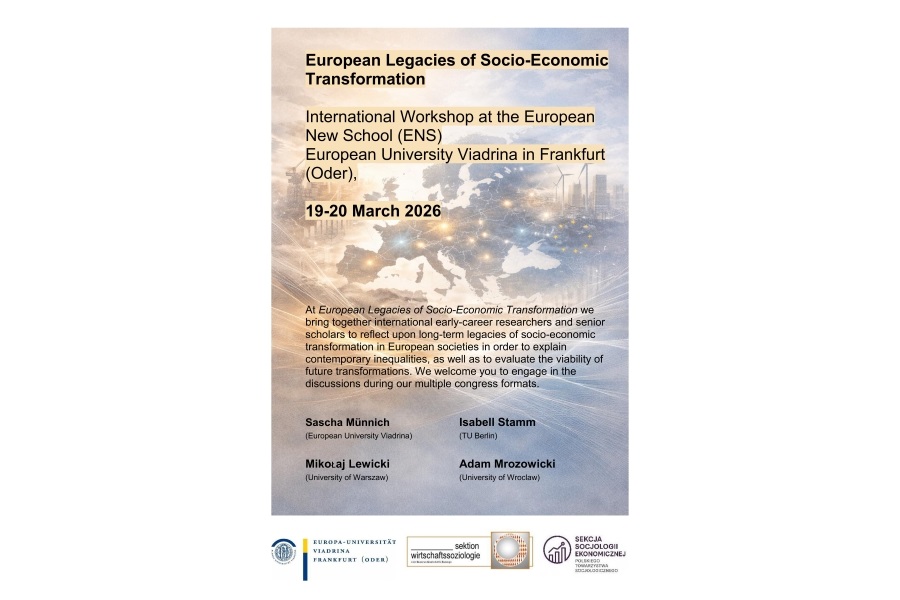
On March 19–20, 2026, Prof. Dr. Sascha Münnich (EUV) and Isabell Stamm (TU Berlin) co-hosted the second conference on the sociology of economic transformations. It was titled “European Legacies of Socio-Economic Transformation.”
As a joint event of the German and Polish economic sociology sections the conference brought together international researchers from the fields of sociology, political science, economics and history at the European New School (ENS) of the European University Viadrina to discuss the long-term consequences of socio-economic transformations in Europe. In the context of multiple crises—ranging from geopolitical tensions and economic uncertainties to technological upheavals—transformation was understood not as a unique event but as a long-term, multifaceted process. A central aim was to connect different regional, theoretical, and disciplinary perspectives and to analyze transformation both as structural change and as a practical social experience, as well as look at the long-term structures of inequality that emerge from it.
Mihai Varga opened the first panel, titled “The Longue Durée of Post-Soviet Socio-Economic Transformations,” by drawing a connection between the venue, the topic, and his own background: As a Viadrina graduate himself, he opened the dialogue between economic sociology and political economy with his contribution on the effects of political de-risking narratives on energy and transport infrastructures such as oil and gas pipelines, ports, and railways in Eastern Europe.
Anna Nicińska followed up with an examination of the privileges enjoyed by members of the Communist Party in the former Soviet Union. These privileges affected central areas of life such as housing, work, and healthcare. Her focus was on the question of what became of these privileges after the fall of communism and which groups were able to maintain their privileged positions.
In the second panel, titled “Housing and Communities in Socio-Economic Transformation”, Maja Wróblewska focused on unresolved property claims, using the city of Warsaw as a case study. She demonstrated that legal ambiguities in the housing sector have persisted since the fall of communism and that informal and formal structures continue to coexist. By addressing the related questions of institutional formality and access to resources, she highlighted the importance of networking activities and individual opportunities for investment in home ownership.
Mikołaj Lewicki, who co-hosted the workshop together with Adam Mrzowicki on the Polish side, deepened the analysis of inequality in the housing sector by addressing the role of credit and falling mortgage rates, as well as the high homeownership rate in Poland. He raised the question of the extent to which homeownership is linked to financialization and what forms of equality or inequality arise from this. In doing so, he identified groups of winners and losers—for example, in comparison to Spain—and viewed credit systems as a market instrument that opens up new opportunities. Poland exhibits patrimonial capitalism rather than classical financialization: massive privatization is taking place, yet housing has not been fully commodified.
Martin Munk concluded by broadening the perspective with the fundamental question of the nature of current transformation. Using fertility rates and the reproduction of social status, he illustrated the connection between technological change and social stratification. By comparing Denmark, Poland, and Germany, he was able to demonstrate long-term developments such as the increase in low-skill service jobs and the emergence of new technology-driven industries. His thesis was that while the labor market tends to appear more meritocratic, intergenerational mobility is simultaneously declining, making family structures more unstable.
The third panel “Transformations of the Workspace” was opened by fourth co-host Adam Mrozowicki. In his presentation, he introduced three projects that address work strategies in relation to external influences. These projects examined socio-economic shocks, long-term structural crises, crises of social reproduction, and the polycrisis. Based on a typology of life strategies and biographical interviews with workers, the various projects presented were linked together through argumentation. The presentation highlighted the closure of the sociological vacuum and the reconstruction of civil society in the sphere of work as key tasks.
The second presentation was given by Sabine Pfeiffer. Her talk was centered on the question of what distinguishes “normal” social change from transformation. The key was to emphasize “transformation of systems” rather than “transformation within systems”. Technological change in the workplace was the focus of the presentation. Based on a survey of workers in Iceland, Germany, and Poland, various events were categorized according to their perceived intensity of transformation. The workers' responses enabled a comparison of transformation experiences across the countries analyzed.
Fotoimpressionen
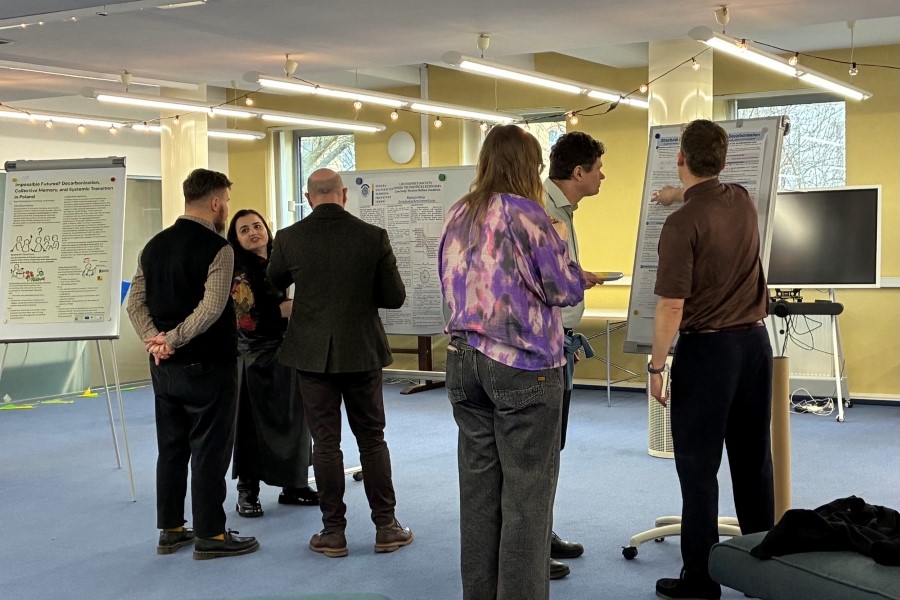
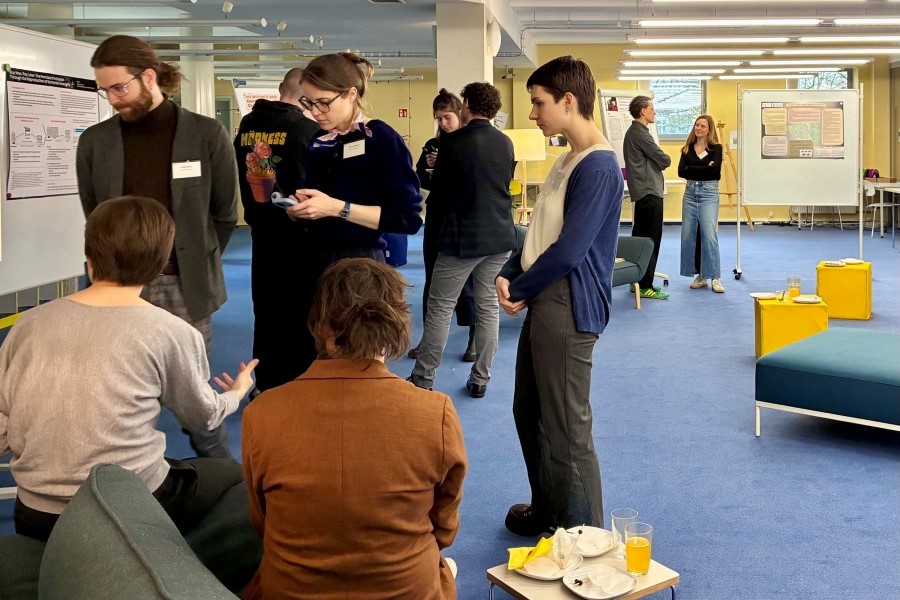
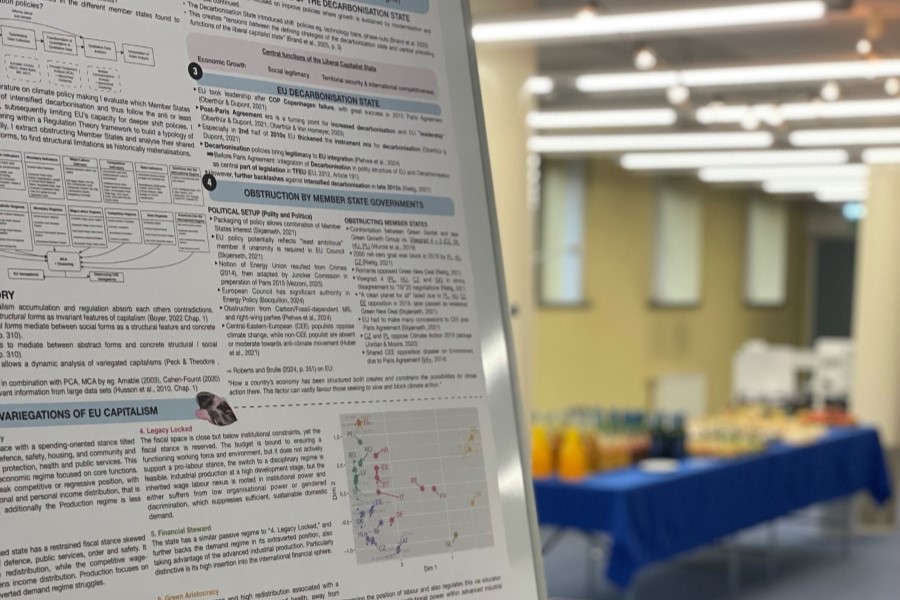
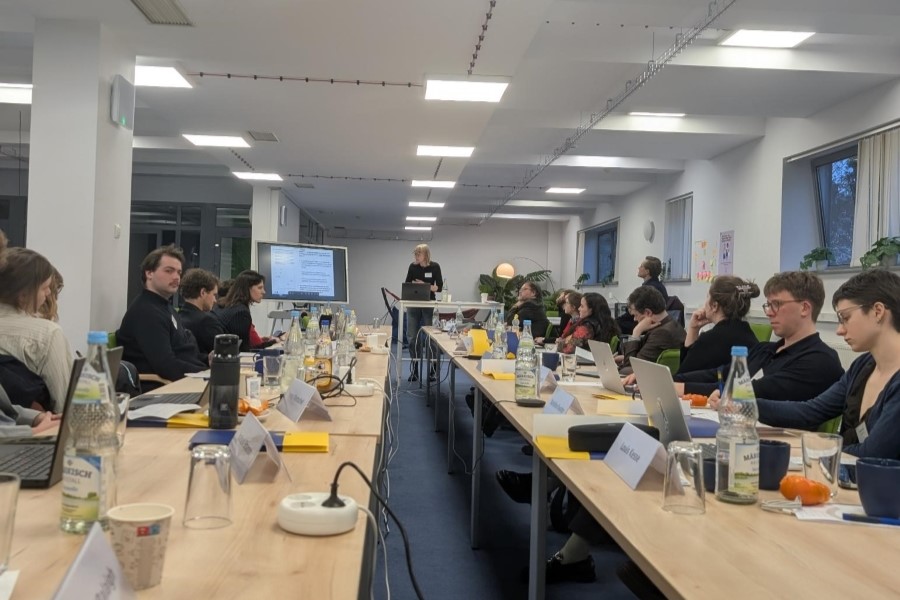
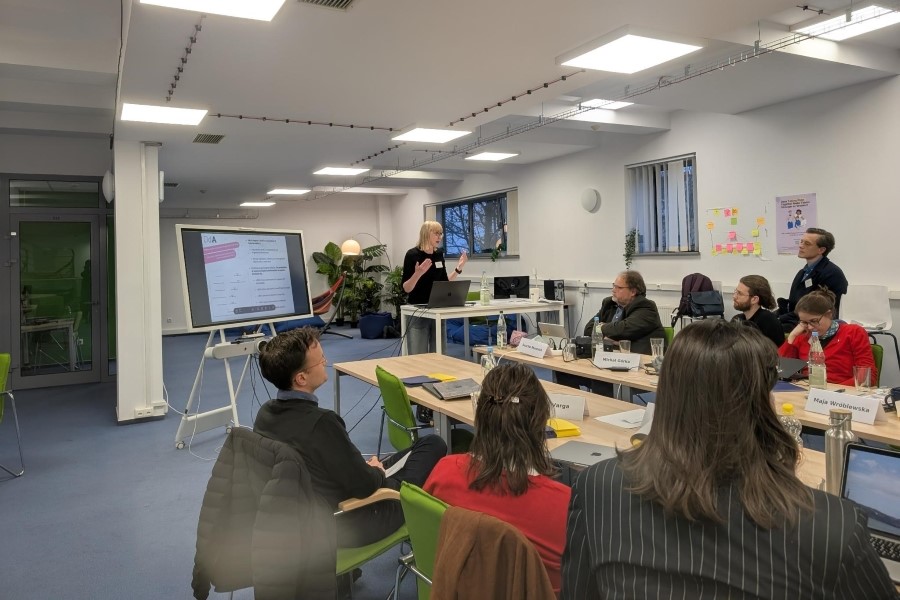
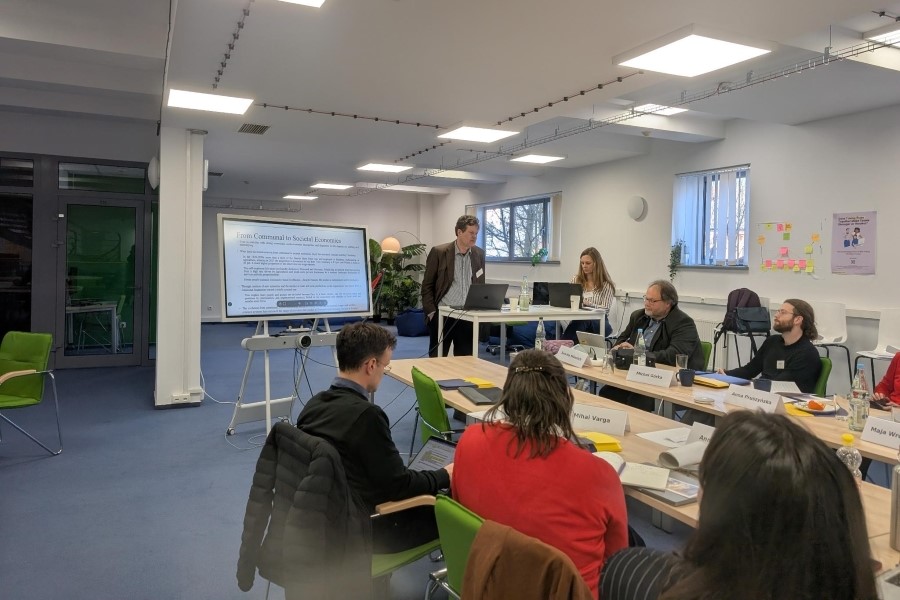
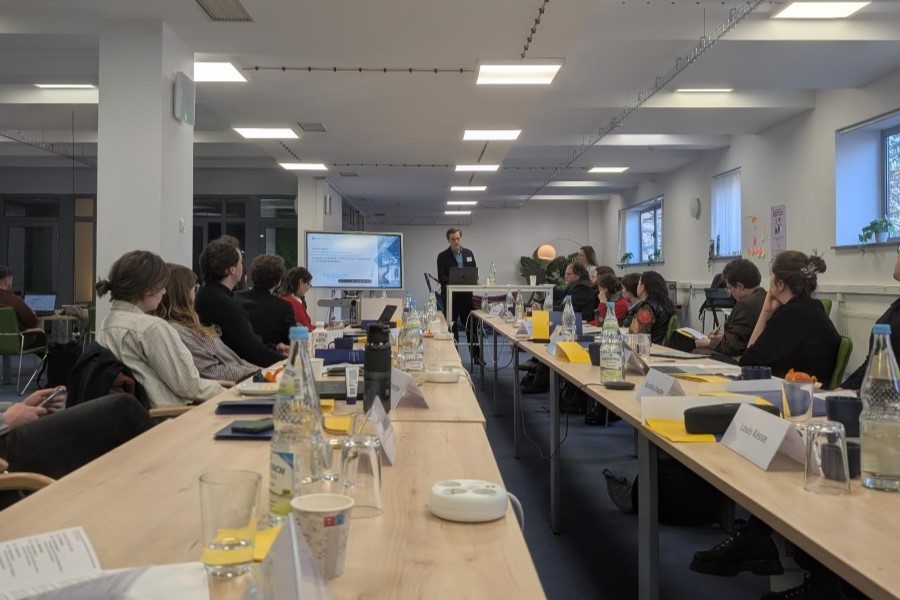
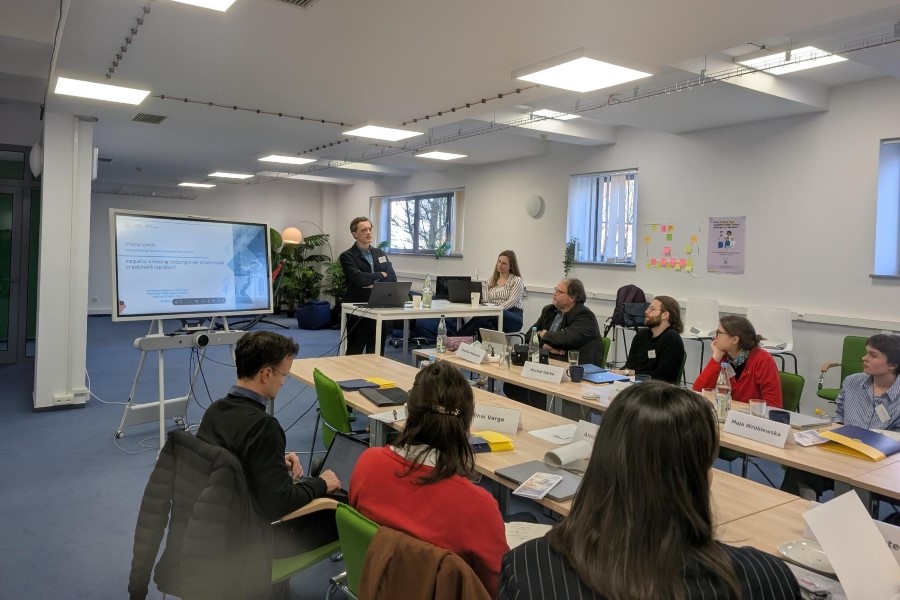
Friday morning of the conference there was a poster brunch session in which younger researchers from Poland, Germany and other European countries presented their transformation-related projects and research. Beyond the richness and diversity of topics and perspectives, it became very visible, how much projects in the field of regional studies, political theory, labor and financial markets studies, can gain from discussing typical aspects of transformation processes in their respective fields.
The 4th panel, 'Economic Memories and Contemporary Economic Diagnosis', addressed the question of how memories and discourses from the past influence current economic thinking and understanding. Till Hilmar of the University of Vienna approached these questions in his research on 'The Productivity Gap: Tracing Two Decades of Neoliberal Narratives'. In his presentation, he shared the findings of his research, which was guided by the question of how economic think tanks evaluated East German productivity in the decades following 1989/90. Adopting a discourse analytical approach, he revealed different patterns of argumentation in his research material regarding the evaluation and justification of the assumed 'lack of productivity' in East Germany. In his presentation, Chris O’Ralaigh from the Technological University of Dublin addressed the topic of economic memory in the Irish political economy. He demonstrated how, in the current property crisis and the ongoing emigration of young Irish people, the historical traces of the 19th century – the Great Famine caused by Britain – can be found in the fact that an understanding of working-class consciousness and the associated welfare state policies representing workers’ interests to this day remain in the shadow of the recognition of Irish nationhood. He argued that despite a sense of economic recovery in the 1990s – marked by the IRA ceasefire, rising wages, the ability of workers to travel, and a prevailing sentiment that ‘we are all middle class now’ – this optimism did not last long and was quickly dispelled by the Irish state’s debt and the EU bailout schemes.
In the concluding panel, Isabell Stamm, Sascha Münnich and Mikolaj Lewicki tried to distill the common questions, concepts and aspects from the conference, how transformation processes of the past inform social inequalities of today, as well as how they define possible paths and hindering blocks for present transformations such as the digitalization, the ecological transformation or the intensifying crisis of industrial production in Europe. Among the aspects discussed were (1) the gap between transformation processes and transformation narratives as an important driver of social conflict and political action; (2) recurring patterns of inequality of wealth and/or power, which safeguard continuity or even block change, within elite networks, social movements or administrative; as well as (3) the importance of legitimizing change with the past, which could mean connecting to the past or consciously deviating from it. The importance of a perspective that includes the people suppressed in or excluded from transformation was stressed, and the aspect of violence in those processes should not be omitted.
Zurück
Beitrag teilen: