KD
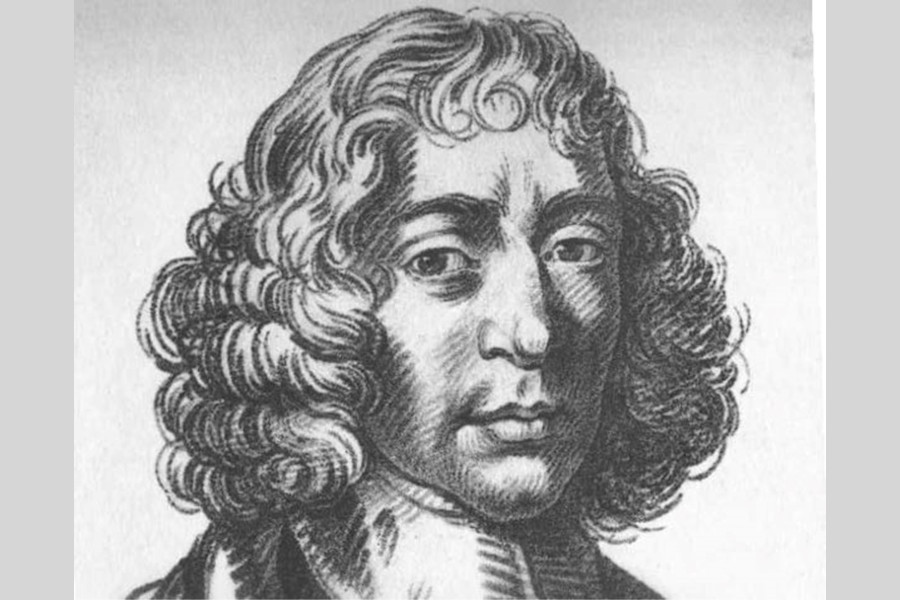
Reading seminar organised by the Spinoza Society e.V.
10–12 July 2026 Leucorea Wittenberg Spinoza – Part Five of the *Ethics* On the Power of the Intellect, or on Human Freedom With lectures by Katja Diefenbach and Beth Lord
Read more
The Professorship addresses the following questions and tasks:
There is something insistent in modern orders that eludes the reflexive organisation of these orders and forms their aneconomic remainder or uncatchable surplus. Hardly anything is discussed more controversially in continental philosophy and cultural studies than the question of how this surplus can be understood and the extent to which it stabilises or destabilises socio-cultural systems of order, and sets cybernetic or emancipatory upheavals in motion. In this ambivalence-conscious perspective, the professorship team is dedicated to the cultural and continental philosophical discussion of transformative and transversal social practices. The fact that the concept of culture is used in the plural implies a twofold programme: on the one hand, it is a critique of those European concepts of culture which, since modern times, have claimed to summarise the entirety of the achievements of an epoch or a so-called people in the collective singular in order to justify ascending levels of civilisation, fictitious communities and hierarchical demarcations between nature and culture, other and own, myth and logos and to inscribe them in colonial-capitalist legitimation narratives. On the other hand, the plural of cultures affirms the fact that cultural philosophies have so far successfully refrained from prescribing a fixed subject area in order to instead analyse transformations of the social, cultural and economic in a pluralistic setting of approaches and methods and to repeatedly ask differently through which forms of exchange and value, modes of ownership and appropriation, knowledge dispositives and speech acts, rites and games social divisions are instituted, reinstituted or transformed. The professorship team pursues a transcultural and entanglement-logical approach that works in the context of (post-)structuralist, decolonial and (post-)Marxist theories. Upheavals are philosophically reflected on the basis of differential, often transcontinental contact zones in micro- and macrological dimensions and with special consideration of the history of violence, (post)colonial and capitalist modes of socialisation.
The Professorship's main areas of work include:
By appointment by e-mail to:
Prof Dr Katja Diefenbach
diefenbach@europa-uni.de
Dr Gal Kirn
kirn@europa-uni.de
Alena Reichmayr
reichmayr@europa-uni.de
Friederike Schneider
frschneider@europa-uni.de
Room: HG 279
By arrangement.
Room: HG 281
Team
Student staff
Former research assistants
Former visiting researchers
Former staff members
Former student assistants
Room: HG 280