

Veranstaltungen und News
IFES Ringvorlesung "Beyond Sustainability: Humanities and Social Sciences Perspectives on the Ecological Crisis"
NEUES DATUM 2.Februar / NEW DATE 2 February
16-18 Uhr (c.t.),
online auf Zoom.
Vortrag im Rahmen der Ringvorlesung "Beyond Sustainability: Humanities and Social Sciences Perspectives on the Ecological Crisis".
Amelie Kutter (EUV): Governmentalities of Sustainability Transition: The Case of Peatlands
Peatlands have recently gained unusual prominence in policymaking and public debate. When they are wet, they store plenty of greenhouse gases, host endangered species, and regulate the local climate and water, but when they are drained they emit many greenhouse gases. Therefore, the rewetting and reuse of peatlands has become subject of programmed sustainability transition, i.e., targeted policies that aim to make production and consumption more ‘climate neutral’. The lecture will use the example of peatlands in the State of Brandenburg in order to examine the way sustainability transition is made ‘governable’ across scales by both governance instruments and local actors’ strategies. Drawing on the perspective of governmentality studies and the political sociology of policy instruments, the talk will outline the rationalities, technologies of knowledge production, and subjectivities that are constituted by these practices. The relations these practices establish between the governing and the governed as well as between nature and humans and what contradictions emerge from that, allowing for contestation, will be assessed, leading to more general conclusions on the challenges of sustainability transition.
Der Vortrag wird auf Englisch gehalten, Fragen können gerne auch auf Deutsch gestellt werden.
Zur Website der Ringvorlesung
19. Januar
16-18 Uhr (c.t.),
AM 233 und online auf Zoom.
Vortrag im Rahmen der Ringvorlesung "Beyond Sustainability: Humanities and Social Sciences Perspectives on the Ecological Crisis".
Andreas Bähr (EUV): Times of Crisis. Concepts of the Past, Present and Future in Early Modern Human-Environment Relations
Crises are times when the fate of individuals, cultures, and societies is decided. In the early modern period, an era marked by climate change, epidemics, and war, this decision was conceived against the backdrop of the apocalypse. ‘Crisis’ meant the interpretation of divine signs in terms of salvation history, which promised insight into the progress and end of the world and thus provided guidance for human decision-making and action. The knowledge of the future inscribed in this practice of sign reading was fraught with constitutive provisionality and uncertainty. However, awareness of this uncertainty did not lead to desperate resignation or a carefree pursuit of private interests. Rather, it made people realise that in order to ensure their own self-preservation, they must always consider the impact of their actions on the entire human and natural world.
Der Vortrag wird auf Englisch gehalten, Fragen können gerne auch auf Deutsch gestellt werden.
Zur Website der Ringvorlesung
12. Januar
16-18 Uhr (c.t.),
AM 233 und online auf Zoom.
Vortrag im Rahmen der Ringvorlesung "Beyond Sustainability: Humanities and Social Sciences Perspectives on the Ecological Crisis".
André Rottmann (EUV): Images, Infrastructures and Intelligences. Ecologies of Contemporary Art between Nature and Technology
Since the 1960s, art has commonly been defined as fraying the boundaries between traditional mediums and new media and as situating, the aesthetic object in expanded spatial, social, political and discursive force fields. From today’s perspective, this critical development may most adequately be revisited in terms of tracing contemporary art’s ecological entanglements: starting with Land Art’s embrace of entropy in industrial landscapes, through site-specific projects attentive to institutional, architectural and urban infrastructures, to recent works signalling the interdependencies of human and non-human, biological and technical actors and actants. This lecture offers a short history of the relationships that art after modernism has been entertaining with its increasingly relational and hybrid environments. In dealing with salient examples of art in the 2020s, such a discussion of an “ecological turn” necessarily entails a closer look at the role of “Artificial Intelligence” in contemporary art theory and practice.
Der Vortrag wird auf Englisch gehalten, Fragen können gerne auch auf Deutsch gestellt werden.
Zur Website der Ringvorlesung
05. Januar
16-18 Uhr (c.t.),
AM 233 und online auf Zoom.
Vortrag im Rahmen der Ringvorlesung "Beyond Sustainability: Humanities and Social Sciences Perspectives on the Ecological Crisis".
Estela Schindel (EUV): Beyond the (Hu)man: Challenges and Debates around the Anthropocene
The ‘Anthropocene’ was conceptualised as a way of accounting for an epoch in which humans have become a decisive planetary force. While the term has been criticized for universalizing “humanity” and reproducing Western, anthropocentric, and dualist assumptions, it nonetheless opens a useful space for rethinking the entanglements of society, nature, and technology. For the social sciences, this implies a paradigm shift, as it challenges the idea that humans are the main force shaping social life and calls for relational, post-dualist modes of knowing. This lecture explores the Anthropocene as an epistemological crisis, examining key theoretical debates and alternative frameworks that may help reimagine agency beyond human exceptionalism. What conceptualisation of the human might allow for both relational embeddedness in the web of life and a renewed emancipatory horizon? Is a sociology beyond ‘Man’ possible, and how could it contribute to this rethinking?
Der Vortrag wird auf Englisch gehalten, Fragen können gerne auch auf Deutsch gestellt werden.
Zur Website der Ringvorlesung
15. Dezember
16:00-17:30 Uhr (s.t.),
AM 233 und online auf Zoom.
Vortrag im Rahmen der Ringvorlesung "Beyond Sustainability: Humanities and Social Sciences Perspectives on the Ecological Crisis".
Leon Wansleben (Max Planck Institute): Decarbonisation at your Doorstep. How Infrastructures, Politics, and Climate Activists Shape Household Energy Transitions
The renewable energy transition is at the heart of any serious effort to slow down global warming. But while renewables provide growing shares of electricity, shifting household energy consumption from fossil sources to green power proves extremely contentious. This lecture sketches these difficulties and discusses relevant factors that can block or ease household decarbonization. A particular focus lies on distributional politics. While past scholarship has mainly highlighted how fossil interest groups oppose and obstruct climate policy, the general population largely fears losing out from domestic energy transitions. Legacy infrastructures and the degree to which institutions prioritize social provisioning or profit interests shape these attitudes and the legitimacy of climate policy. In this politically contentious situation, climate movements must craft new strategies that consider widespread anxieties and demands for social protection.
Der Vortrag wird auf Englisch gehalten, Fragen können gerne auch auf Deutsch gestellt werden.
Zur Website der Ringvorlesung
08. Dezember
16-18 Uhr (c.t.),
AM 233 und online auf Zoom.
Vortrag im Rahmen der Ringvorlesung "Beyond Sustainability: Humanities and Social Sciences Perspectives on the Ecological Crisis".
Pierre Wat (Université Paris 1 - Panthéon Sorbonne): Paradise Lost? Art Facing the Anthropocene
Can art still re-enchant the world in the age of the Anthropocene? What, then, is the meaning of the word “re-enchantment” in the context of a world whose finitude seems to impose itself as a major horizon? It is the role of art, and that of the aesthetic categories generally associated with it, such as the Sublime and the Beautiful, that we must question today. What function can now be attributed to art, between consolation, lucidity, and the search for a new form of beauty despite everything, which forces us to reconsider our practices and beliefs in this area? By examining a selection of recent works, the lecture will look at how artists are managing, or not, to preserve a sense of wonder in these times of predicted disaster. The question of the power of art in the face of history will thus be raised.
Der Vortrag wird auf Englisch gehalten, Fragen können gerne auch auf Deutsch gestellt werden.
Zur Website der Ringvorlesung
01. Dezember
16-18 Uhr (c.t.),
AM 233 und online auf Zoom.
Vortrag im Rahmen der Ringvorlesung "Beyond Sustainability: Humanities and Social Sciences Perspectives on the Ecological Crisis".
Jan-Erik Schirmer (EUV): Climate Liability. The David v. Goliath Dynamic in the Courtroom
Across the globe, climate litigation is increasingly directed at carbon majors such as Shell or RWE, with claims demanding compensation for climate-related damages. Plaintiffs are often actors from the Global South – small farmers, island inhabitants, or Indigenous communities. Owing to this David-versus-Goliath constellation, climate liability cases serve a dual narrative purpose: on the one hand, they translate complex climate issues, such as sea-level rise or glacier melt, into concrete individual disputes that can be readily understood by lay audiences and resonate with their lived experience. On the other hand, liability proceedings provide those affected by climate change with a platform to articulate their concerns in a highly visible way and to raise awareness within the global public. The lecture presents key climate liability cases and discusses the extent to which this narrative effect becomes apparent.
Der Vortrag wird auf Englisch gehalten, Fragen können gerne auch auf Deutsch gestellt werden.
Zur Website der Ringvorlesung
24. November
16-18 Uhr (c.t.),
AM 233 und online auf Zoom.
Vortrag im Rahmen der Ringvorlesung "Beyond Sustainability: Humanities and Social Sciences Perspectives on the Ecological Crisis".
Miriam Lang (Universidad Andina Simon Bolívar): Fostering Desirable Ecosocial Futures in Times of Darkness
This lecture will analyse the current disputes around ecosocial transformation in the midst of a civilizational crisis, ranging from the political far right to approaches of systemic transformation, adopting a Latin American perspective. It will also explore what the role of critical social sciences and humanities can be in this scenario, and how we can think about and practice a pedagogy of liberation in these dark times.
Der Vortrag wird auf Englisch gehalten, Fragen können gerne auch auf Deutsch gestellt werden.
Zur Website der Ringvorlesung
17. November
16-18 Uhr (c.t.),
AM 233 und online auf Zoom.
Vortrag im Rahmen der Ringvorlesung "Beyond Sustainability: Humanities and Social Sciences Perspectives on the Ecological Crisis".
Gal Kirn (EUV): Liberation Ecology - A Blueprint for Future Research
The inquiry into a “liberation ecology” aims to trace various moments, artworks and theoretical fragments that were produced by heterogeneous liberation movements in (semi-)peripheral locations, particularly in the second part of the 20th century. Environmental sensibilities and awareness, paired with an important relationship to the land emerged in the (semi-)peripheries long before the Western “ecological turn” in the 1970s, and were able to articulate an explicit care for and alliance with the non-human world in the struggle against fascist or colonial oppression. This research aligns itself with the “maroon ecology” (Malm 2018) and shares the broader perspective of “decolonial ecology” (Ferdinand 2019), which opposes the mainstream Western politico-philosophical-aesthetic canon that determines who or what is (or is not) included in the distribution of the sensible, and exposes what have been –in the most impossible circumstances –artistic expressions of environmental care.
Der Vortrag wird auf Englisch gehalten, Fragen können gerne auch auf Deutsch gestellt werden.
Zur Website der Ringvorlesung
10. November
16-18 Uhr (c.t.),
AM 233 und online auf Zoom.
Vortrag im Rahmen der Ringvorlesung "Beyond Sustainability: Humanities and Social Sciences Perspectives on the Ecological Crisis".
Anna Henkel (Universität Passau): Dilemmas of Sustainability
Sustainability is generally recognised as a concept and an objective. In practice, however, it is sometimes understood in very different ways, and conflicts regularly emerge. In order to deal with this, the lecture proposes to use dilemmas of sustainability as a productive heuristic for reflecting on obstacles to sustainable development. First, the understandings of sustainability and dilemmas that Henkel used in her research will be presented, as well as typical conflicts as potential causes of dilemmas of sustainability. Subsequently, the dimensions for early recognition in areas of tension, for clarification and processing of dilemmas of sustainability will be outlined. The derived metacriteria of sustainability with their guiding questions for reflection serve as orientation for project work in the field of sustainability and can be helpful for funding agencies and regulation.
Der Vortrag wird auf Englisch gehalten, Fragen können gerne auch auf Deutsch gestellt werden.
Zur Website der Ringvorlesung
03. November
16-18 Uhr (c.t.),
AM 233 und online auf Zoom.
Vortrag im Rahmen der Ringvorlesung "Beyond Sustainability: Humanities and Social Sciences Perspectives on the Ecological Crisis".
Stefan Janković (University of Belgrade): Digging into Ecopolitical Dispute. Mapping Controversies around Lithium Extraction in Serbia
The proposed lithium mine in Serbia’s Jadar Valley has become one of Europe’s most contested ecopolitical disputes. Initially promoted by Rio Tinto and the Serbian government as a driver of development and green transition, it soon provoked massive resistance over ecological risks, legality, and transparency, turning into a paradigmatic case of the Anthropocene’s ontopolitical rupture. The lecture examines how human and non-human actors mobilize claims and shape collective action, while digital infrastructures condition visibility and volatility of disputes. It relies on controversy mapping of 1,004 texts (2004–2025) to trace how evidence, sovereignty, and ecological vigilance were articulated through networks of alliances and oppositions. Findings show cycles of escalation, suspension, and resurgence, culminating in four meta-controversial registers, which reveal deeper struggles over liveable futures in the Anthropocene.
Der Vortrag wird auf Englisch gehalten, Fragen können gerne auch auf Deutsch gestellt werden.
Zur Website der Ringvorlesung
27. Oktober
16-18 Uhr (c.t.),
AM 233 und online
Auftakt der Ringvorlesung "Beyond Sustainability: Humanities and Social Sciences Perspectives on the Ecological Crisis", Wintersemester 2025/26, montags, 16-18 Uhr (c.t.), AM 233 und online. Der Vortrag wird online gehalten, ZuhörerInnen sind aber auch eingeladen, vor Ort teilzunehmen.
Jason Moore (World-Ecology Research Collective, Binghamton University): On the ‘Sustainability of the Rich’. How the One Percent uses Nature to Make You Afraid, Keep its Wealth, and Hold on to Power
In this lecture, environmental historian Jason W. Moore exposes the “climate hoax” at the heart of contemporary sustainability politics, arguing that the planetary elite—the Point One Percent—exploits genuine biospheric crises to safeguard their wealth and power while imposing austerity on the masses. Drawing on historical patterns from the Little Ice Age to the 1960s environmental revival, Moore reveals how ruling classes have repeatedly invoked “Nature” during moments of social unrest to justify repression, enclosure, and technocratic control. Far from an anthropogenic disaster, the climate crisis is capitalogenic, driven by capitalism’s relentless quest for Cheap Nature—a system now faltering amid agricultural stagnation, overaccumulation, and political instability. Moore critiques both climate maximalists, who hype apocalyptic doom to demand emergency rule, and minimalists, who down play impacts in favor of techno-market fixes, as two sides of the same elite coin. Instead, he indicts the eco-industrial complex as a mechanism for greenwashing monopoly capitalism. Yet, there’s opportunity in the chaos: climate disruption weakens elite grip, opening doors for mass movements to reclaim the web of life for the working-class majority. Rejecting fearmongering and the authoritarianism of climate emergency politics, he calls for a radical reframing: democratizing the web of life and reclaiming power from the bankers, Tech Bros, and warmongers.
Jason W. Moore teaches world environmental history at Binghamton University, USA, where he coordinates the World-Ecology Research Collective. He hates war, loves the working class, and looks forward to the day when the expropriators are expropriated. Recent books include L’écologie-monde ducapitalism (2024), Oltre la giustiziaclimatica (2024), La gran implosion: Clase, imperio y crisis climática en el capitalismozombi (2025), and with Raj Patel, A History of the World in Seven Cheap Things (2017). The tenth anniversary edition of Capitalism in the Web of Life will be published later this year. His books and essays on class, capital, and empire in the web of life have been awarded the Alice Hamilton Prize in environmental history, the Byres and Bernstein Prize in agrarian studies, the Braverman Prize in labor studies, and the Immanuel Wallerstein Award. A prolific writer and speaker, Moore’s interviews, lectures, and essays can be found in over 20 languages on his website: https://jasonwmoore.com/.
Der Vortrag wird auf Englisch gehalten, Fragen können gerne auch auf Deutsch gestellt werden.
Zur Website der RingvorlesungIFES Gegenwartsanalysen zur Mittagszeit
05. November
13:00-14:00 Uhr (s.t.)
GD 102 und im Livestream
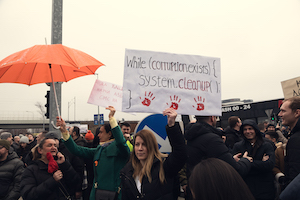
Stefan Janković (University of Belgrade): On Political Liminality. Serbia’s Student Protests and the Remapping of Political Space
Eine Kooperation mit dem Viadrina Center B/ORDERS IN MOTION
Moderation: PD Dr. Carolin Leutloff-Grandits (Viadrina Center B/ORDERS IN MOTION)
Since November 2024, student-led protests sparked by a fatal collapse at the Novi Sad train station have become one of the most significant mobilizations in Serbia’s recent history, pressing for accountability, transparency, and democratic reforms. Over the past year, joined by teachers, high school pupils, and citizens, students have used blockades, strikes, and occupations of media buildings and squares, supported by decentralized networks of coordination, to sustain pressure on state institutions. Whereas the government’s response has oscillated between repression and attempts at delegitimization, the movement’s tactics have shown remarkable persistence and adaptability, posing a serious test for how we conceptualize political mobilization. This lecture approaches the student movement through the lens of political liminality, emphasizing its capacity to distort the legitimate politics. By tracing the material infrastructures of blockades and occupations, we argue that students reconfigured flows, sites, and publics, enacting fragile but concrete re-territorializations of the political space.
Der Vortrag findet auf Englisch statt.
Anmerkung: Aufgrund technischer Probleme konnten ca. die ersten 20 Minuten des Livestreams nicht übertragen werden, wir bitten hierfür um Entschuldigung. Die vollständige unbearbeitete Aufzeichnung der Veranstaltung steht jedoch ab sofort unter folgendem Link zum Nachhören und -schauen zur Verfügung: https://europa-uni.cloud.panopto.eu/Panopto/Pages/Viewer.aspx?id=f6c619c0-8465-464e-8faa-b36800627d26.
Hier geht es zur Aufzeichnung der Veranstaltung
18. Juni
13:00-14:00 Uhr (s.t.)
GD 102
Globaler Handelskrieg? Internationale Politik und Kapitalismus in der Krise
IFES Gegenwartsanalyse zur Mittagszeit mit Jürgen Neyer (Europäische und Internationale Politik / EUV) und Sascha Münnich (Soziologie der Wirtschaft / EUV), moderiert von Sonja Priebus (Europa-Studien / EUV).
In dieser Mittagsrunde diskutieren Jürgen Neyer, Professor für Europäische und Internationale Politik, und Sascha Münnich, Professor für die Soziologie der Wirtschaft, die politischen und sozio-ökonomischen Dimensionen der aktuellen Rückkehr von Protektionismus und handelspolitischen Konflikteskalation zwischen den USA, China und der EU. Im Gespräch werden die Ursachen und Folgen der jüngsten und noch zu erwartenden Zollkämpfe für die institutionelle Ausgestaltung transnationaler Wertschöpfungsketten, das Finanzsystem sowie für die Ausrichtung nationaler Wirtschafts- und Handelspolitik analysiert. Zudem stellt sich die Frage nach den politischen Konstellationen auf nationaler und internationaler Ebene, deren Zusammenwirken Eskalationen befördern oder auch entschärfen kann. Sehen wir hinter der Krise die Restauration oder eine Neuformierung der internationalen (Wirtschafts-)Politik, und was bedeuten diese Entwicklungen für die Frage der ökologischen und digitalen Transformation?
Brown-Bag-Lunches können natürlich mitgebracht werden.
Eine Aufzeichnung der Veranstaltung und eine Besprechung im Viadrina Newsportal stehen jetzt online zum nachhören und -lesen zur Verfügung.
Hier geht es zur Aufzeichnung der VeranstaltungWeitere News und Veranstaltungen
29. Januar 2026
17:00 Uhr, Logensaal.
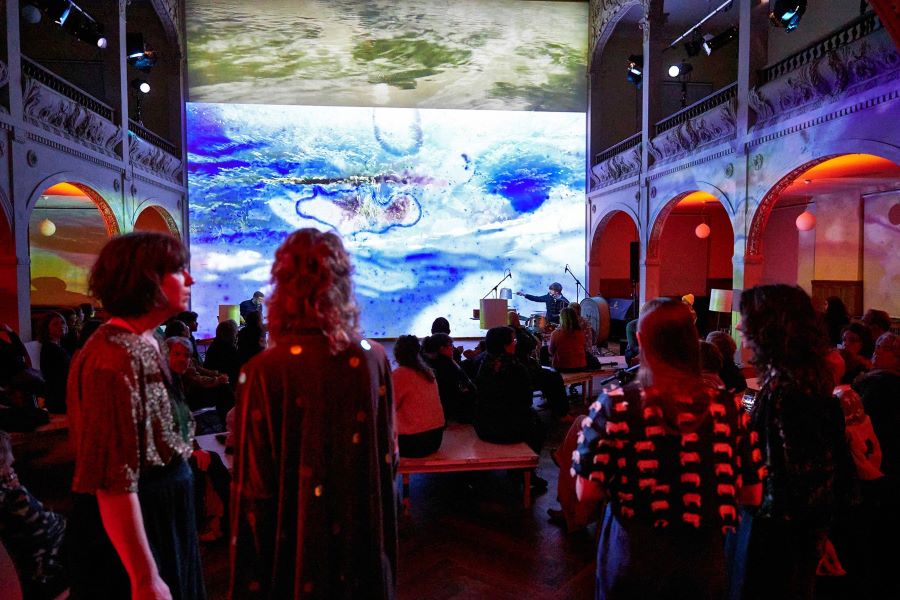
OderHive – Eine multisensuelle Flussreise zum Hören, Sehen und Fühlen
Wie klingt die Oder? Was nehmen Wassertiere wahr und wie verändert der Fluss menschliche Sinneswahrnehmungen? Die intermediale Performance „OderHive – eine multisensuale Flussreise zum Hören, Sehen und Fühlen“ geht diesen Fragen am Donnerstag, dem 29. Januar, ab 17.00 Uhr, an der Europa-Universität Viadrina Frankfurt (Oder) auf den Grund. Das Neue-Musik-Ensemble FrauVonDa// ist zu Gast im Logensaal, Logenstraße 11, und lädt Interessierte ein, gemeinsam mit Gästen aus Kunst und Wissenschaft auf eine sinnliche Reise durch den Lebensraum Oder zu gehen. Die Veranstaltung findet in deutscher und englischer Sprache statt.
Der Logensaal wird während der Performance zum vibrierenden Flussbett, auf dem sich wissenschaftliche Erkenntnisse über die Wahrnehmung von Fischen und künstlerische Fiktion miteinander verweben. Das Publikum begegnet den Wissenschaftler*innen und Künstler*innen aus Deutschland und Polen in offenen Talkrunden – die Künstlerin Claudia van Hasselt hat dafür das Diskursformat senSONICtalk© entwickelt. Die interaktiven Gespräche werden künstlerisch gestaltet und wechseln sich als eigene Kunstform ab mit Sound Art, visueller Kunst, freier Improvisation und den Kompositionen von Wojtek Blecharz.
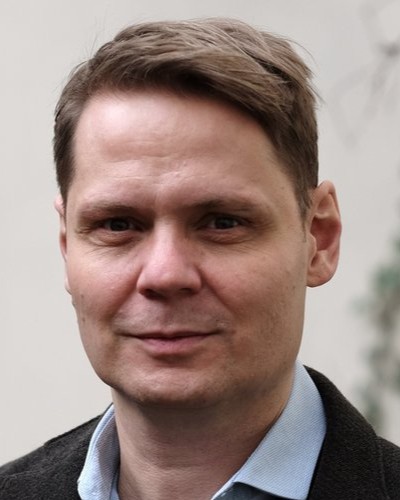
Es moderieren Dr. Anja Hennig (Viadrina) und Dr. Simon Teune (Freie Universität Berlin).
OderHive findet in Kooperation mit dem Leibniz Institut für Gewässerökologie und Binnenfischerei in Berlin, der Freien Universität Berlin/Intervenierende Künste und dem Viadrina-Institut für Europastudien sowie dem Viadrina Center B/ORDERS IN MOTION statt.
28. Januar 2026
16:15-17:45 Uhr, HG 109 und online auf Zoom.
Jens Adam (BTU Cottbus): Erosion and Refiguration. Ethnographic Examinations along the Democracy-Authoritarianism Matrix
Der Vortrag wird von dem Viadrina Center B/Orders in Motion organisiert und von Dr. Anja Hennig moderiert. Die Veranstaltung wird auf Englisch in Präsenz und online stattfinden. Sie ist ausschließlich für Mitglieder der Universität geöffnet. Melden Sie sich hier vorab zum Vortrag an.
Prof. Dr. Jens Adam ist politischer Anthropologe und empirischer Kulturwissenschaftler, sowie Leiter des Fachgebiets Kulturmanagement an der BTU Cottbus-Senftenberg.

26. Januar 2026
14:15-15:45 Uhr, online auf Zoom.
Milan Babić (University of Amsterdam): Geoökonomie - Anatomie der neuen Weltordnung
Als Corona die Zerbrechlichkeit der Lieferketten aufzeigte, war bald von »De-Globalisierung« die Rede. Aus dem Aufstieg Chinas werden protektionistische Forderungen abgeleitet. Und angesichts zunehmender internationaler Spannungen sprechen viele von einer Rückkehr der Geopolitik. Daraus zu schließen, die neoliberale Globalisierung sei passé und der (National-)Staat wieder da, ist aus Sicht Milan Babićs jedoch zu einfach. Staaten verabschieden sich nicht aus transnationalen Netzwerken. Stattdessen erleben wir eine Regionalisierung, die auch wirtschaftlichen Imperativen folgt. Und im Kampf um globale Infrastrukturen sind Unternehmen weiterhin zentrale Akteure. Wer die neu entstehende Weltordnung begreifen will, so Babić, muss sie daher aus der Perspektive der Geoökonomie betrachten.
Milan Babić ist Associate Professor in Political Economy am Department for Political Science der University of Amsterdam und ist PI des DECARB Projekts.
Der Vortrag wird auf Deutsch gehalten.
Ringvorlesung, Wintersemester 2025/26
Montags, 16-18 Uhr (c.t.), AM 233 und online auf Zoom
Konzept und Organisation: Amelie Kutter und Estela Schindel
Climate change, extractivist devastation, ocean acidification, and the accelerating loss of species continue to worsen worldwide, with environmental damage intensifying across the globe. As the ecological crisis deepens, the humanities and social sciences are called upon to develop resources — conceptual, analytical, and methodological — in order to make sense of the current situation and to respond to its challenges. The concept of sustainability — once central to environmental discourse — has been criticized for its association with technocratic, managerial, and neoliberal agendas that fail to address the structural, historical, and cultural dimensions of environmental degradation. At the same time, the crisis demands more than critique: it calls for innovative ways of thinking, organizing, and acting that engage with the social, political, ethical, and symbolic foundations of human-environment relations. This interdisciplinary lecture series brings together scholars from across the humanities and social sciences to examine the ecological crisis from diverse and complementary angles, including critical sustainability studies, decolonial ecologies, environmental justice, or posthumanist theory. By bringing these perspectives in dialogue, the lecture series aims to push the debate beyond sustain ability, toward new ways of thinking and acting in the face of ecological transformation.
Alle Vorträge finden auf Englisch statt. Das genaue Programm finden Sie hier: Plakat / Flyer mit abstracts.
Zur Website der Ringvorlesung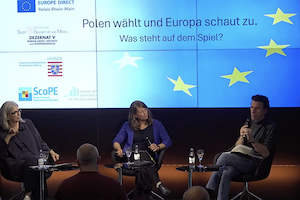
Im Europagespräch der Evangelischen Akademie in Frankfurt am Main diskutierte Institutsmitglied Anja Hennig (Europa-Universität Viadrina Frankfurt (Oder) am 9. Mai 2025, vor der ersten Wahlrunde, mit dem Journalist Jan Opielka und der Moderatorin Carla Sappok (Speakers-Pool Team EUROPE DIRECT der Europäischen Kommission) über die anstehenden Präsidentschaftswahlen in Polen und alles, was damit zusammenhängt: Über die Situation des Rechtsstaates, die Sicherheits-, Migrations- und Wirtschaftspolitik, über die Katholische Kirche und ihren moralpolitischen und bildungspolitischen Einfluss sowie über demographische Faktoren und gesellschaftliche Einstellungen.
Hier geht es zum Europagespräch.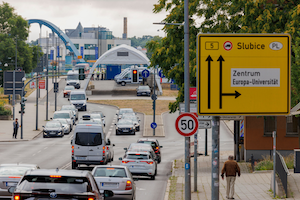
17. Juli
18:00-20:00 Uhr (c.t.)
Senatssaal (Hauptgebäude, Raum HG 109) und im Livestream via Zoom.
Anmeldung: https://forms.europa-uni.de/form/alias/EUV/grenzkontrollen-research-factory/. Nach der Anmeldung erhalten Sie den Link zum Livestream per E-Mail.
Grenzkontrollen an der Oder: Rechtliche, politische und humanitäre Herausforderungen
Die Podiumsdiskussion wird in deutscher Sprache geführt. Im Livestream wird eine Simultanübersetzung auf Englisch und Spanisch angeboten.
Eine Veranstaltung des Viadrina Center B/ORDERS IN MOTION in Kooperation mit der European Reform University Alliance (ERUA) und dem Viadrina Institut für Europastudien (IFES).
Podiumsdiskussion mit Marcus Engler (Deutsches Zentrum für Integrations- und Migrationsforschung DeZIM), Lea Christinck (Deutsches Zentrum für Integrations- und Migrationsforschung DeZIM) und Norbert Cyrus (Viadrina Center B/ORDERS IN MOTION), die eine aktuelle Expertise zu den Auswirkungen von Binnengrenzkontrollen vorgelegt haben, sowie Claudia M. Hofmann (Lehrstuhl für Öffentliches Recht und Europäisches Sozialrecht mit Schwerpunkt in der interdisziplinären Sozialrechtsforschung, EUV), Europa- und Sozialrechtsexpertin der Viadrina, und Anja Hennig (Professur für Vergleichende Politikwissenschaft, EUV), Spezialistin für die deutsch-polnischen Beziehungen an der EUV. Moderiert von Kira Kosnick (Viadrina Center B/ORDERS IN MOTION).
Zwei Bundesregierungen haben seit Herbst 2023 in mehreren Schritten Kontrollen an den deutschen Außengrenzen eingeführt. Dabei ist die Bundespolizei am 7. Mai 2025 angewiesen worden, auch Asylsuchende zurückzuweisen. Das Berliner Verwaltungsgerichts hat die Zurückweisung von drei Geflüchteten an der deutsch-polnischen Grenze mit einem Beschluss vom 2. Juni 2025 als rechtswidrig bewertet. Im Fokus der öffentlichen Aufmerksamkeit steht die Situation in Frankfurt (Oder), wo zwei stationäre Grenzkontrollpunkte eingerichtet wurden. Hier hatten die drei Schutzsuchenden, deren Zurückweisung gerichtlich als rechtswidrig bewertet wurde, vergeblich versucht, einen Antrag auf Asyl zu stellen. Inzwischen kündigte auch die polnische Regierung eine vorübergehende Einführung von Kontrollen an der Grenze zu Deutschland und Litauen zum 7. Juli 2025 an.
Das Podiumsgespräch wird diese Entwicklungen und Maßnahmen insbesondere im Hinblick auf Rechtsstaatlichkeit und Verhältnismäßigkeit einordnen. Aussagen zur Wirksamkeit der Binnengrenzkontrollen als Mittel zur Reduzierung irregulärer Einreisen und Schleusungen werden überprüft und den negativen Auswirkungen auf die Grenzregion, auf den Flüchtlingsschutz und das deutsch-polnische Verhältnis gegenübergestellt.
Eine Aufzeichnung der Veranstaltung und eine Besprechung im Viadrina Newsportal stehen jetzt online zum nachhören und -lesen zur Verfügung.
Hier geht es zur Aufzeichnung der Veranstaltung.
Die Gesprächsreihe Mensch und Planet versteht sich als Plattform für Lehre, Forschung und Transfer zu Fragen der sozio-ökologischen Krise und des Klimawandels aus einer multidisziplinären und breiten Perspektive. Die am Viadrina-Institut für Europastudien angesiedelte offene Serie begrüßt Beiträge von KollegInnen und Studierenden, die an folgenden –oder damit verbundenen– Themen interessiert sind:
- Globale Erwärmung und Klimawandel: soziale, ökonomische und politische Dimensionen
- Umweltkatastrophen: Verlust der Biodiversität, Ozeanübersäuerung, Veränderung der hydrologischen Zyklen (Überschwemmungen, Dürren, Tod von Flüssen)
- Nachhaltigkeit, Milderung und Anpassung, De-Growth: die Vielfalt der Ansätze zur Bewältigung der aktuellen Krise auf politischer und zivilgesellschaftlicher Ebene
- Extraktivismus, Kapitalismus und Ungleichheiten zwischen dem globalen Norden und Süden
- Mensch-Natur- bzw. Kultur-Natur-Dualismus: historische, anthropologische und philosophische Ansätze
- Das Anthropozän in den Geisteswissenschaften, der Literatur und den Künsten: Ecocriticism und die Suche nach Sprachen für die Krise und den Verlust der Natur
Das Projekt bietet ein dauerhaftes sowie flexibles Format für kontinuierliche Reflexion und Austausch über Lehre und Forschung zu diesen Themen. Gerne können wir auch verwandte Aktivitäten mitorganisieren, Lesegruppen und Seminare veranstalten und als Vernetzungsplattform für Projekte an der Viadrina dienen.
Termine im Sommersemester 2025:
03.07.2025, 11:00-13:15 Uhr (s.t.): How to research about Rights of Nature? Accounts from the field by advanced and graduated master students
Mit MA Moritz Wiegand, Alba Trabandt und Valeria Florez. Im Rahmen des Seminars “Rights of Nature from the Global South to Europe: Practices, Cosmovisions, Policies” durchgeführt von Anja Hennig und Estela Schindel.
02.07.2025, 18:00-20:00 Uhr (c.t.), HG 217: Paradise Lost? Art facing the Anthropocene
Pierre Wat (Paris/EUV)
09.05.2025, 18:30-20:00 Uhr: The Reality of Ghosts: Haunted Landscapes in the Anthropocene
Juliane Rebentisch (Hamburg/Princeton)
Termine im Wintersemester 2024/25:
27.11.2024, 17:30-18:30 Uhr: Klimaschutz nach Baku: Reimund Schwarze im Gespräch
Reimund Schwarze (Helmholtz Zentrum für Umweltforschung)
17.12.2024, 16:15-17:30 Uhr: Reflections on the Past and Future of the Kakhovka Hydropower Plant Area (KHPP)
Tetiana Gardashuk (National Academy of Sciences of Ukraine), in Kooperation mit dem Competence Network Interdisciplinary Ukraininan Studies (KIU)
6.01.2025, 16:15-17:45 Uhr: European Values in the EU's Developmental, Energy and Climate Policies
Randall Halle (Pittsburgh University), in Kooperation mit dem Jean Monnet Policy Network ValEUs
09. Mai
18:00-19:00 (s.t.)
Logensaal
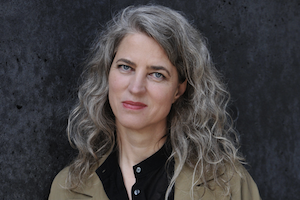
Juliane Rebentisch: The Reality of Ghosts: Haunted Landscapes in the Anthropocene
Ein Impulsvortrag auf Englisch von Juliane Rebentisch (Hamburg/Princeton) im Rahmen der Tagung „Realisms of Relations. Ecologies of Art in the Aftermath of Modernity“ der Juniorprofessur für Theorie der Künste und Medien und in Kooperation mit der IFES Gesprächsreihe "Mensch und Planet".
Eine Art und Weise, wie Menschen heute ihre Beziehungen zu nicht-menschlichen Wesen realisieren, ist die Erkenntnis ihrer Abwesenheit. Das unheimliche Gefühl, dass „nichts da ist, wo etwas sein sollte“ (Mark Fisher), korrespondiert mit der Wahrnehmung von Landschaften, die von überlagernden Geschichten der Gewalt heimgesucht werden. Eine Sensibilität für die Gespenster des Anthropozäns - für die Zeichen vergangener Lebensformen - entspricht einem Impuls, nicht zu vergessen und sich dem Verlust im Zeitalter des Massensterbens zu stellen. Der Vortrag untersucht die realistische Wendung des Gespenstermotivs im ökokritischen Diskurs und diskutiert dessen Konsequenzen für eine Politik der Trauer.
Juliane Rebentisch ist Professorin für Philosophie an der Hochschule für bildende Künste Hamburg. Von 2014 bis 2024 war sie Mitglied des Forschungsrats am Frankfurter Institut für Sozialforschung, dem sie nun als Permanent Fellow verbunden ist. Seit 2019 ist sie Regular Visiting Professor am German Department der Princeton University. Von 2015 bis 2018 hatte sie das Amt der Präsidentin der Deutschen Gesellschaft für Ästhetik inne. 2017 wurde sie mit dem Lessing-Preis der Freien und Hansestadt Hamburg ausgezeichnet. Zu ihren Publikationen gehören: Ästhetik der Installation (Suhrkamp 2003); Die Kunst der Freiheit. Zur Dialektik demokratischer Existenz (Suhrkamp 2012); Theorien der Gegenwartskunst zur Einführung (Junius 2013); Der Streit um Pluralität. Auseinandersetzungen mit Hannah Arendt (Suhrkamp 2022).
29. April
18:00 - 20:00 (c.t.)
Senatssaal, HG 109
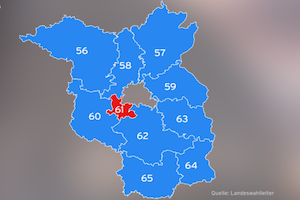
Brandenburg nach der Bundestagswahl: Analyse und Ausblick
Podiumsdiskussion mit:
Gideon Botsch (Universität Potsdam)
Tom Leistner (Projektleiter „Wir sind der Osten“)
Theresa Gessler (EUV)
Moderation: Susann Worschech (EUV)
In der Bundestagswahl vom 23. Februar 2025 hat sich mit der AfD als stärkste politische Kraft in Brandenburg eine Partei durchgesetzt, die fremdfeindliche oder gar rassistische, anti-wissenschaftliche und anti-demokratische Positionen vertritt. Über die Folgen auf Bundesebene hinaus stellen sich in diesem Zusammenhang Fragen, die Brandenburg als Arbeits- und Lernort betreffen: was bedeutet diese Wahl für unsere Stadt und unsere Universität? Mit Blick auf die möglichen Ursachen für dieses Ergebnis, vor allem aber auf die künftigen Perspektiven für Land, Stadt und Universität, lädt das IFES zum Gespräch ein.
Eine Besprechung der Wahlanalyse ist im Newsportal erschienen.
Hier geht es zur Besprechung der Podiumsdiskussion im Viadrina Newsportal.
"Der vielleicht größte Trugschluss der aktuellen Klimapolitik ist die irreführende Annahme, dass sich die Klimakrise allein durch technische Lösungen und ohne Einbeziehung der Natur bewältigen lässt." (Reimund Schwarze, 10.03.2025)
In seinem "Plädoyer für eine ganzheitliche Klimapolitik und eine Neuorganisation der Kompetenzen in der neuen Bundesregierung" macht sich Prof. Dr. Reimund Schwarze für einen Klimaschutz stark, der neben technischen vor allem auch auf naturbasierte Lösungen und deren unmittelbare Potenziale setzt sowie die Prinzipien einer gerechten Energiewende in der internationalen, nationalen und kommunalen Klimapolitik ernst nimmt. Prof. Dr. Schwarze schließt sein Plädoyer mit konkreten Reformvorschlägen für die nationale und internationale Politik.
Hier geht es zum ausführlichen Jahresbericht.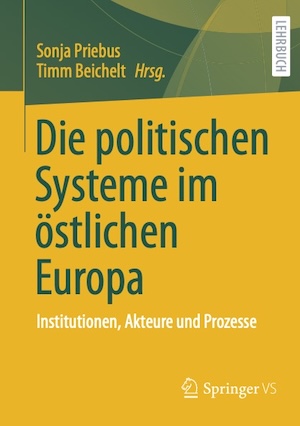
Das Buch bietet eine vergleichende Darstellung der politischen Systeme der Staaten des östlichen Europa, d.h. aller Staaten in Mittel-, Ost- und Südosteuropa. Die insgesamt 22 Länderkapitel beschreiben und analysieren zentrale Institutionen wie Parlament, Regierung, Staatspräsident und das Wahlsystem. Um der starken Dynamik von Transformation und Post-Transformation Rechnung zu tragen, wird auch die soziale und historische Einbettung der Institutionen beleuchtet.
Das Buch ist unter Herausgabe von unseren Institutsmitgliedern Sonja Priebus und Timm Beichelt bei Springer VS erschienen und richtet sich an Studierende der Politikwissenschaft sowie an alle Personen, die sich für die dynamischen politischen Entwicklungen im Osten Europas interessieren.
Hier geht es zur Verlagsseite.
Wiederauflage der Working Paper Series, Beginn der Gesprächsreihe "Mensch & Planet" u.a. mit Vorträgen zur COP29 und Reflexionen über den Wert von Flüssen im Kontext des russischen Angriffskriegs in der Ukraine sowie weitere öffentliche Veranstaltungen und Gegenwartsanalyse, darunter Veranstaltungen anlässlich des 40. Todestages Michel Foucaults sowie zu den anhaltenden Grenzkontrollen an der deutsch-polnischen Grenze und deren Auswirkungen auf Frankfurt (Oder) und zu den Präsidentschaftswahlen in den USA - das waren Themen der Aktivitäten am IFES im vergangenen Jahr.
Hier geht es zum ausführlichen Jahresbericht.